

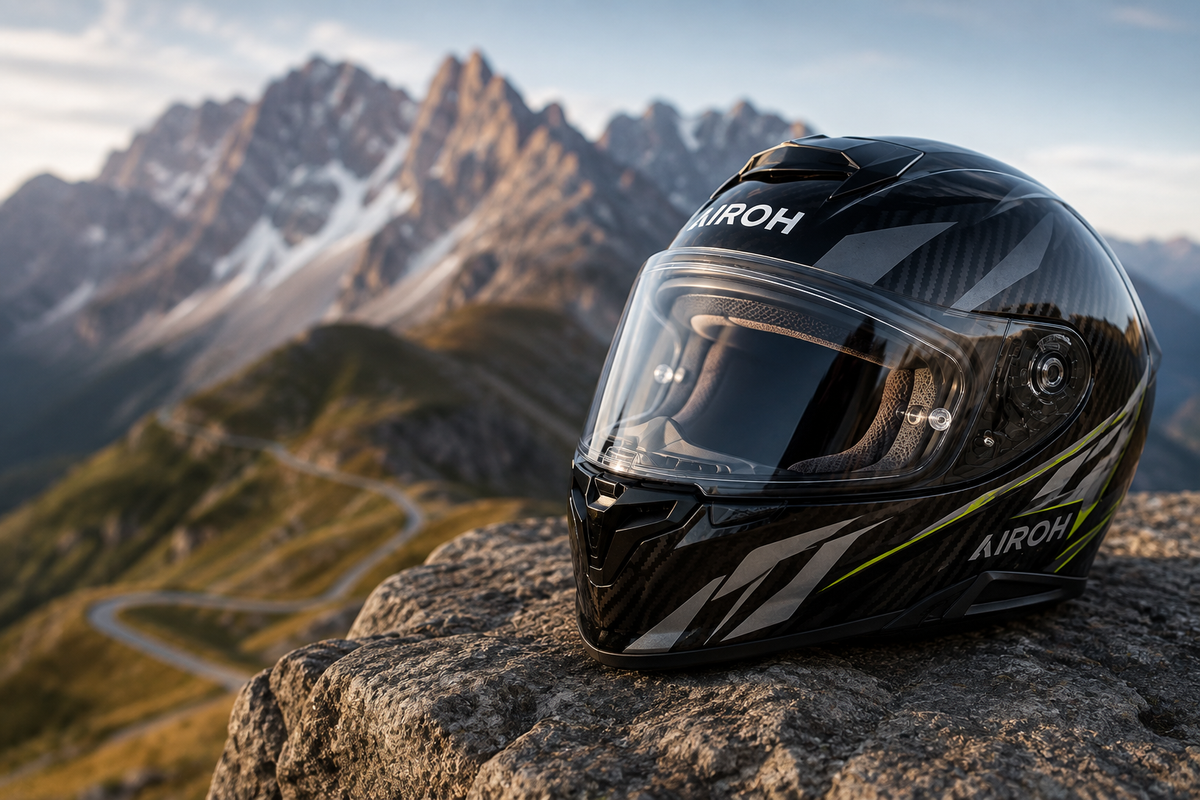
Helmet Weight Explained: Does a Lighter Helmet Really Matter?
When buying a motorcycle helmet, riders often compare safety ratings, shell materials, ventilation and features—but there is another specification that deserves more attention: helmet weight.
You may have noticed that premium helmets can be surprisingly light, especially models made using carbon fibre or other advanced composite materials. But does saving a few hundred grams actually make a difference?
Yes—but helmet weight is only one part of the equation.
A lighter helmet can improve comfort and reduce the physical load on your neck and shoulders, particularly during long rides. However, the lightest helmet isn't automatically the best helmet for every rider. Fit, balance, shell construction, safety certification and the helmet's overall design are equally important.
Let's take a closer look.
How Much Does a Motorcycle Helmet Weigh?
There is no single standard weight for a motorcycle helmet. Depending on the shell material, size, design and equipment, a full-face helmet can vary considerably.
As a general guide:
- Lightweight premium helmets: often around 1,300–1,400 g
- Typical full-face helmets: around 1,500–1,600 g
- Heavier touring/adventure/modular helmets: can approach or exceed 1,600–1,800 g
The actual weight can also change with helmet size and features such as internal sun visors, communication systems, peak visors, Pinlock inserts and other accessories.
So, when comparing helmets, don't look only at the number printed on the specification sheet. Consider how that weight is distributed around your head.
Why Does Helmet Weight Matter?
Your helmet sits at the top of your body, which means your neck muscles have to support and control it while you ride.
That becomes particularly noticeable when you're riding for several hours.
Research examining headgear loads has found that both weight and centre of gravity can affect neck muscle loading and fatigue. Heavier headgear can increase physical demand, while the position of the weight also plays an important role.
Another study found that heavier helmet loads were associated with increased local fatigue in the neck and shoulders and reduced performance in the tested participants.
For motorcycle riders, this can translate into something very familiar: a heavy helmet may feel fine for a 20-minute ride but become noticeably tiring after several hours.
Does a Lighter Helmet Reduce Neck Fatigue?
It can.
Imagine holding a 1 kg weight in your hand. It doesn't sound particularly heavy. Now imagine holding it away from your body for several hours.
Your helmet works in a similar way.
Your neck constantly makes small movements to control your head while you:
- Check your mirrors
- Look over your shoulder
- Look through corners
- Ride over uneven roads
- Fight wind resistance
- Maintain your riding position
A lighter helmet reduces the overall mass your neck has to control.
Studies involving helmet and headgear loading have also shown that increasing helmet weight can increase forces and loading on the neck under certain conditions.
This doesn't mean that a heavy helmet is unsafe. It means that weight can influence long-term comfort and physical fatigue.
But Weight Isn't Everything: Balance Matters
This is one of the most important things riders often overlook.
Two helmets can have almost identical weights but feel completely different when you wear them.
Why?
Centre of gravity.
If more of the helmet's mass sits further away from your head or toward the front, your neck may have to work harder to control it.
Think about holding a 1 kg object close to your chest versus holding the same object with your arm extended. The weight hasn't changed—but the effort required has.
The same principle applies to helmets.
Research into helmet and headgear design has shown that centre-of-gravity position can be just as important as weight itself when considering neck muscle fatigue.
That's why a well-balanced 1,500 g helmet can sometimes feel more comfortable than a poorly balanced 1,400 g helmet.
Does a Lighter Helmet Mean a Safer Helmet?
Not necessarily.
This is where helmet shopping can become confusing.
A lighter helmet isn't automatically safer than a heavier helmet.
Helmet safety depends on many factors, including:
- Shell design
- Impact-absorbing liner
- Fit and retention
- Safety certification
- Construction quality
- Energy management
- Rotational-impact performance
- Overall helmet design
Modern motorcycle helmet research shows that helmet performance involves managing both linear and angular head acceleration, rather than simply reducing weight.
So don't choose a helmet purely because it is the lightest option available.
A properly certified, correctly fitted helmet that provides the protection you need should always take priority.
Why Are Carbon Fibre Helmets Often Lighter?
One reason premium helmets can achieve lower weights is the use of advanced shell materials.
Traditional helmet shells can use materials such as:
- Polycarbonate
- ABS
- Fibreglass composites
Premium helmets may use:
- Carbon fibre
- Carbon-composite constructions
- Multi-material composite shells
Carbon fibre has an excellent strength-to-weight ratio, allowing manufacturers to engineer strong shells while keeping overall weight relatively low.
However, shell material alone doesn't determine the final helmet weight.
The EPS liner, visor mechanism, ventilation system, internal sun visor, padding, fasteners and other components all contribute to the final figure.
Lightweight Helmets Are Particularly Useful for Touring
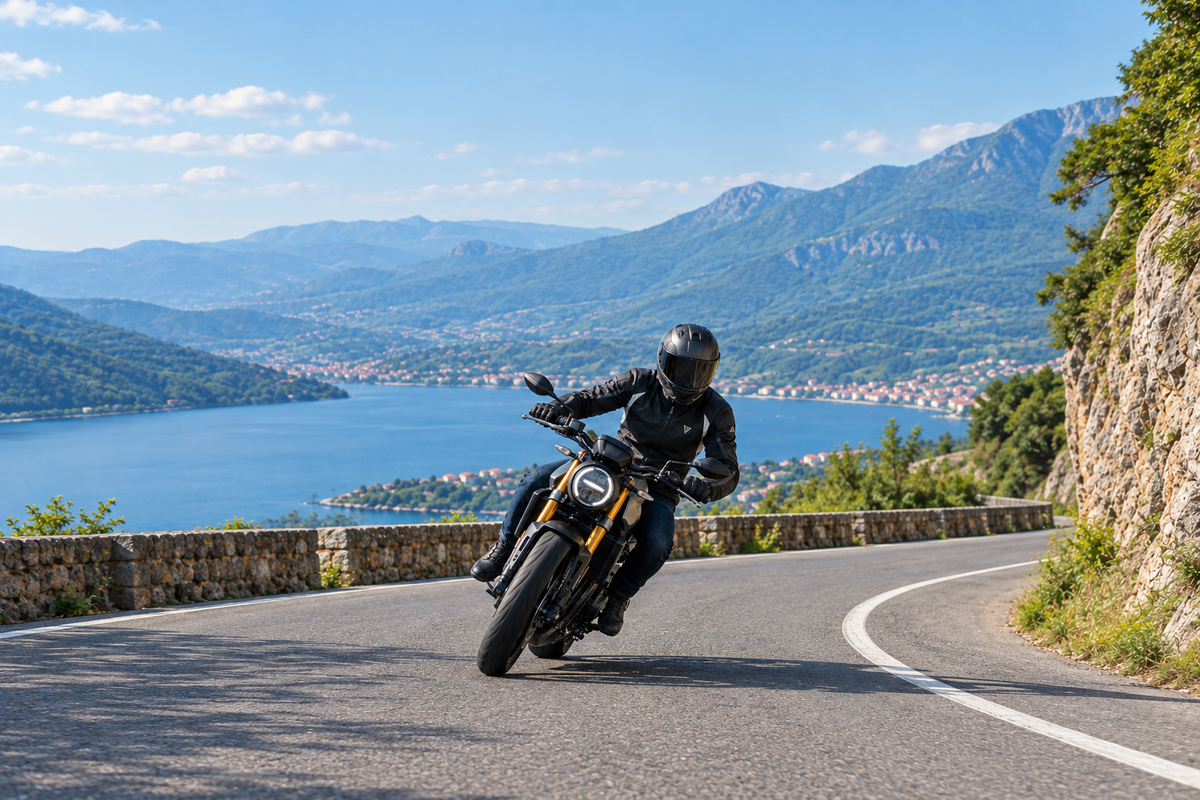
For riders who spend long hours on the motorcycle, helmet weight becomes more noticeable.
Consider a typical 6–8 hour touring day.
You're not just wearing the helmet for a few minutes. Your neck is supporting and controlling it for most of the ride.
A lighter, well-balanced helmet can therefore provide a more comfortable experience over long distances.
This can be particularly useful for:
Touring riders: Long highway days can make helmet weight more noticeable.
Adventure riders: Frequent head movement, standing on the pegs and off-road riding can increase the physical demands on the neck.
Sport riders: A compact, well-balanced helmet can make quick head movements feel more natural.
Daily commuters: Even if each ride is short, wearing a helmet every day means comfort matters over time.
What About Wind Resistance?
Weight isn't the only factor affecting how a helmet feels on your head.
Aerodynamics matter too.
A helmet that is heavier but very aerodynamic may feel more comfortable at highway speeds than a lighter helmet with a poorly managed aerodynamic profile.
At speed, wind can create additional forces on the helmet—especially when turning your head or riding in crosswinds.
This is one reason you shouldn't judge a helmet solely by its weight on a scale.
The better question is:
How does the helmet feel when you're actually riding?
Adventure Helmets Can Be Heavier
Adventure helmets often have additional features that can add weight.
Depending on the design, these may include:
- Peak visor
- Larger ventilation systems
- Internal sun visor
- Dual-purpose configuration
- Additional shell structure
- Larger field of vision
This doesn't make an adventure helmet a bad choice.
It simply means that riders should consider what they actually need.
If you're primarily riding highways, a streamlined road helmet may make more sense.
If you're riding a combination of highways, trails and off-road terrain, the additional functionality of an adventure helmet may be worth the extra weight.
Modular Helmets: Convenience vs Weight
Modular helmets can also be heavier than comparable full-face helmets because of their moving mechanisms and additional components.
However, the extra weight may be a worthwhile trade-off for riders who value:
- Easy communication
- Convenient stops
- Touring practicality
- Opening the chin bar when stationary
- Integrated sun visors on some models
Again, there is no universally "best" helmet.
The best choice depends on how and where you ride.
Don't Forget Helmet Fit
Here's something even more important than saving 100–200 grams:
Your helmet must fit correctly.
A lightweight helmet that doesn't fit properly isn't a good choice.
The helmet should:
- Fit snugly around your head
- Not move excessively when you shake your head
- Sit correctly without excessive pressure points
- Remain securely fastened
- Provide the correct coverage
Research into motorcycle helmet use has found that helmet size, position, fit and stability can affect how securely the helmet remains on the rider's head.
Your first priority should therefore be:
Correct fit → appropriate certification → protection → comfort → weight.
How Much Weight Difference Is Actually Noticeable?
There's no universal number because riders have different head shapes, neck strength, riding positions and preferences.
However, a difference of 200–300 grams can become noticeable during long rides, particularly when combined with poor balance or aerodynamic characteristics.
Instead of asking:
"Which helmet is the lightest?"
Ask:
"Which helmet gives me the best combination of protection, fit, balance and weight?"
That's a much better way to choose.
Should You Pay More for a Lightweight Helmet?
Sometimes.
Premium lightweight helmets can cost considerably more because manufacturers may use advanced materials, manufacturing techniques and more complex construction.
Whether the additional cost is worth it depends on your riding.
If you're a weekend rider doing short trips, you may not notice a huge benefit.
If you're regularly doing:
- 500+ km touring days
- Long highway rides
- Adventure trips
- Multi-day motorcycle tours
then reduced weight and good balance can make a meaningful difference to comfort.
The Bottom Line
Does a lighter helmet really matter?
Yes—but don't make helmet weight your only deciding factor.
A lighter helmet can reduce the physical load on your neck and shoulders and may be more comfortable during long rides. Research also suggests that helmet weight and, importantly, the position of its centre of gravity influence neck loading and fatigue.
But the lightest helmet isn't necessarily the best helmet.
When choosing your next helmet, consider these factors in order:
1. Correct fit
2. Appropriate safety certification
3. Protection and construction
4. Stability and retention
5. Balance and aerodynamics
6. Weight
7. Features and comfort
A helmet should protect your head first. Once you've found a properly certified helmet that fits correctly, then weight becomes an important factor—especially if you spend long hours on the motorcycle.
Final Tip
Don't just pick up a helmet in the showroom and judge it by its weight.
Wear it.
Keep it on for 10–15 minutes. Move your head around. Look left and right. Check for pressure points. If possible, try it with the riding position and gear you normally use.
Because the best helmet isn't necessarily the one that weighs the least.
It's the one that protects you, fits you correctly and remains comfortable mile after mile.

1 comment
Rainoseal New Era of Waterproofing
Here is the detailed company description in English based on Daksh Waterproofing Solutions:
Company Overview
Daksh Waterproofing Solutions is a trusted and professional waterproofing service provider dedicated to protecting residential, commercial, and industrial structures from water leakage, seepage, and dampness. Using high-quality premium chemicals, advanced techniques, and a team of experienced specialists, Daksh Waterproofing Solutions provides durable, long-lasting, and climate-resistant waterproofing treatments.
Our Key Services
Roof & Terrace Waterproofing: Advanced coating and treatment systems to prevent water pooling and seepage through roofs.
Basement Waterproofing: Heavy-duty waterproofing solutions to safeguard basements against underground water pressure and dampness.
Bathroom & Kitchen Seepage Control: Tile and floor waterproofing treatments to stop internal leaks and structural damage.
Water Tank & Swimming Pool Waterproofing: Non-toxic, leak-proof sealant solutions designed specifically for water storage units.
Exterior Wall & Crack Filling Treatments: Protective wall coatings and crack fillers (including Rainoseal products) to shield outer walls from extreme weather and rains.
Why Choose Daksh Waterproofing Solutions?
5+ Years Service Guarantee: Reliable warranty coverage for peace of mind.
Premium Grade Materials: Use of certified, high-standard waterproofing chemicals and materials.
Free Site Inspection: Expert site assessment and customized problem-solving estimates.
Skilled & Experienced Team: Trained technicians with expertise in modern application methods.
Timely Project Completion: Quality execution delivered strictly within committed timelines.
vikram
Leave a comment
This site is protected by hCaptcha and the hCaptcha Privacy Policy and Terms of Service apply.