
The History of Women in Motorcycle Culture: Breaking Barriers in a Male-Dominated Sport
For decades, motorcycling has often been viewed as a male-dominated activity. However, women have been riding motorcycles almost since the invention of the motorcycle itself. Through determination, skill, and passion, female riders have challenged stereotypes, set records, and helped shape motorcycle culture around the world.
The Early Pioneers
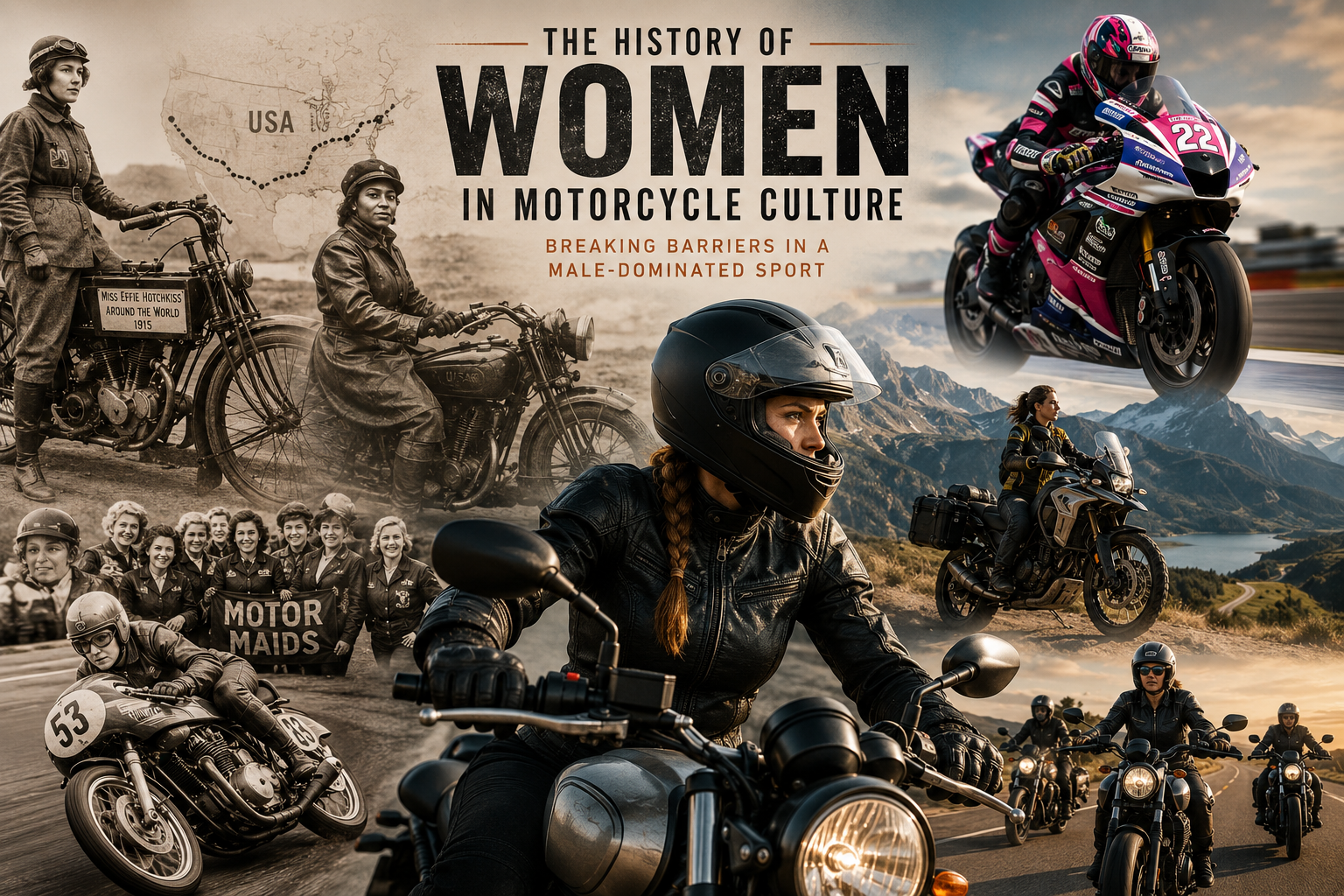
The story of women in motorcycling dates back to the early 1900s. One of the earliest documented female motorcyclists was Effie Hotchkiss, who, along with her mother, completed a cross-country journey across the United States in 1915 on a motorcycle. At a time when even long-distance travel was difficult, her accomplishment proved that motorcycling was not limited by gender.
Another notable pioneer was Bessie Stringfield, often known as the "Motorcycle Queen of Miami." During the 1930s and 1940s, she completed multiple solo cross-country rides across America and later served as a civilian motorcycle dispatch rider during World War II.
Women in Motorcycle Racing
As motorcycles evolved, women began competing in racing disciplines that were traditionally reserved for men.
Dot Robinson became one of the most influential female riders in history. She competed in endurance events and founded organizations that encouraged women to participate in motorcycling.
In later decades, riders such as Ana Carrasco broke new ground by becoming the first woman to win a solo motorcycle road racing world championship, proving that women could compete successfully at the highest levels of the sport.
The Rise of Women's Riding Communities
The second half of the 20th century saw a significant increase in female participation. Women's riding clubs began forming across North America, Europe, and other regions, creating supportive communities for riders.
Organizations such as Motor Maids, founded in 1940, played a major role in connecting female riders and promoting safe, inclusive motorcycling. These groups helped normalize the idea of women riding independently, touring long distances, and participating in motorsports.
Modern Motorcycle Culture
Today, women represent one of the fastest-growing segments of the motorcycle industry. Manufacturers now design gear, helmets, gloves, and motorcycles specifically tailored to female riders, while maintaining the same safety standards and performance features available to men.
Brands such as REV'IT! and Airoh have expanded their product ranges to offer riding equipment designed for diverse riders, reflecting the industry's growing inclusivity.
Breaking Stereotypes
Despite progress, women in motorcycling have often faced assumptions about their abilities or experience. Through participation in touring, adventure riding, track racing, motocross, and daily commuting, female riders continue to challenge these outdated perceptions.
Social media, riding schools, and community events have further amplified the visibility of women in the sport, inspiring a new generation to pursue motorcycling regardless of gender.
Looking Ahead
The future of motorcycle culture is increasingly diverse and inclusive. More women than ever are obtaining motorcycle licenses, competing professionally, leading riding groups, and influencing product development within the industry.
Their contributions have transformed motorcycling from a niche, male-centered activity into a broader community united by a shared passion for riding. The history of women in motorcycle culture is ultimately a story of perseverance, independence, and the pursuit of freedom on two wheels.
Conclusion
Women have been an integral part of motorcycling for more than a century. From pioneering cross-country journeys to championship-winning race careers, they have continuously broken barriers and reshaped perceptions. As participation continues to grow worldwide, female riders are not just part of motorcycle culture—they are helping define its future.

Leave a comment
This site is protected by hCaptcha and the hCaptcha Privacy Policy and Terms of Service apply.