
CE Level 1 vs CE Level 2 Motorcycle Armour Explained
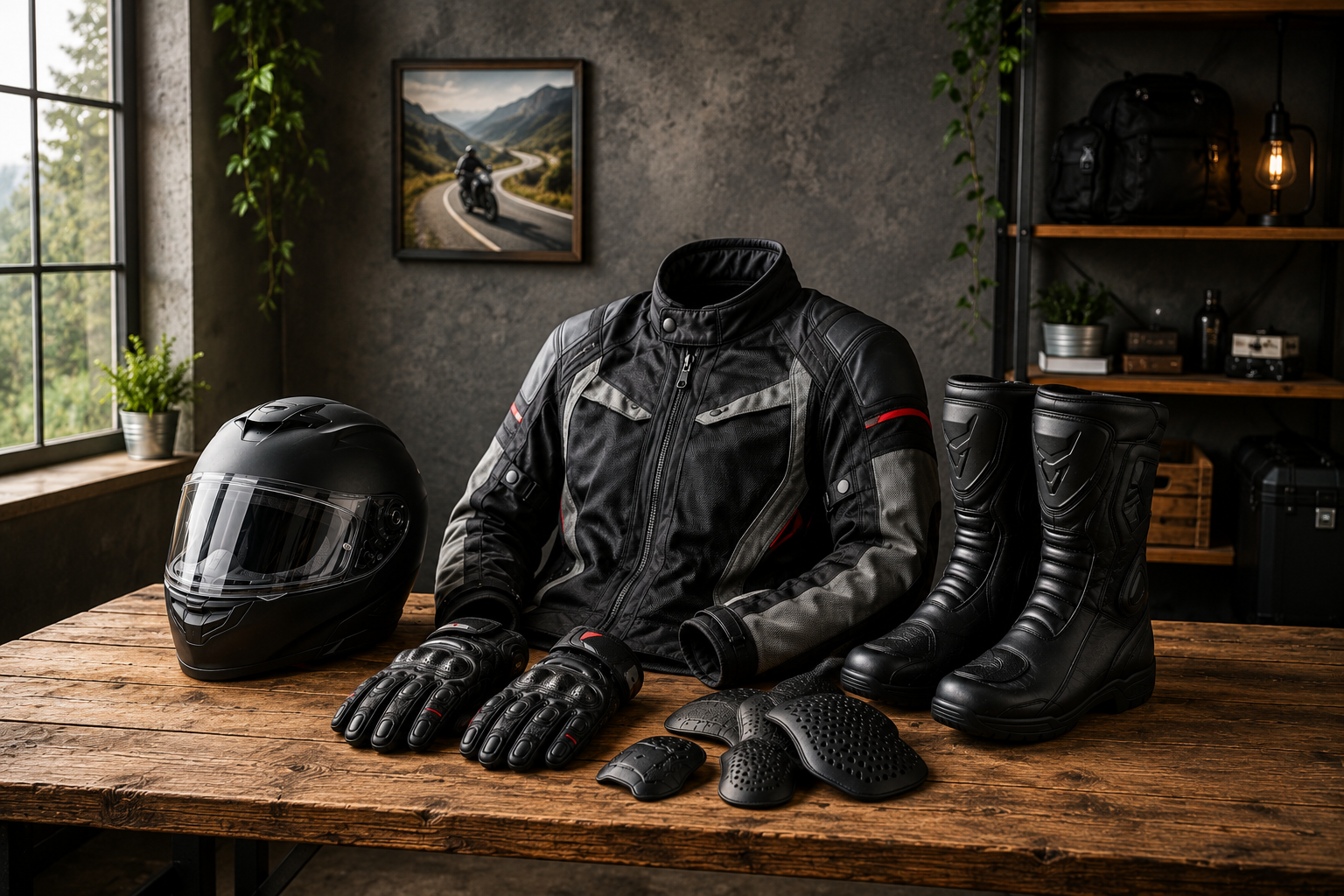
When shopping for motorcycle riding gear, most riders focus on the helmet, jacket design, or brand reputation. However, one of the most important safety features often goes unnoticed - the armour inside your gear.
Whether you're buying a riding jacket, pants, gloves, or protectors, you've probably come across terms like CE Level 1 and CE Level 2 armour. But what do these ratings actually mean? Is Level 2 always better? And should every rider upgrade?
Let's break it down in simple terms.
What Is CE-Certified Motorcycle Armour?
CE certification is a European safety standard used to test motorcycle protective equipment. Before armour can receive CE approval, it undergoes impact testing to measure how much force is transmitted through the protector during a crash.
The goal is simple: the less force that reaches your body, the lower the risk of injury.
Motorcycle armour is commonly found in:
- Shoulders
- Elbows
- Back protectors
- Chest protectors
- Hips
- Knees
These protectors are designed to absorb and disperse impact energy during a fall or collision.
Understanding Impact Protection
Imagine dropping a heavy hammer onto a hard surface.
Without protection, the full force is transferred directly to whatever is underneath. Armour acts like a shock absorber, spreading and reducing that force before it reaches your bones and joints.
The CE standard measures the amount of force that passes through the armour during testing. The lower the transmitted force, the better the protection.
This is where Level 1 and Level 2 come into play.
What Is CE Level 1 Armour?
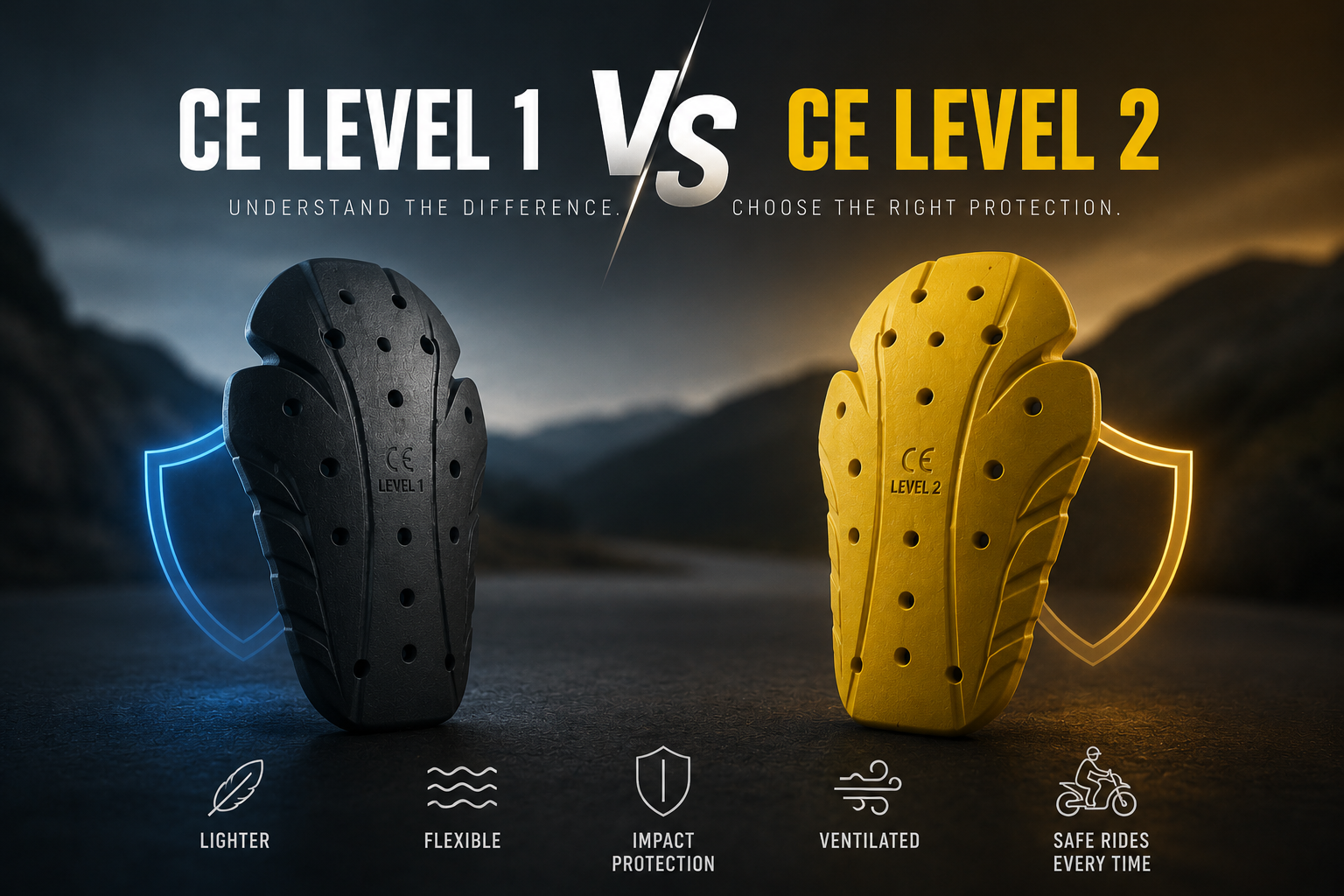
CE Level 1 armour is the entry-level certification for motorcycle impact protectors.
To pass certification, the armour must allow an average transmitted force of less than 35 kN (kilonewtons) during testing.
Benefits of CE Level 1 Armour
- Lightweight construction
- Better ventilation
- Greater flexibility
- More comfortable for daily commuting
- Often found in entry-level and mid-range riding gear
Because it is typically thinner and lighter, many riders find Level 1 armour more comfortable during city rides and short commutes.
Ideal For
- Urban riders
- Daily commuters
- Short-distance touring
- Hot weather riding
What Is CE Level 2 Armour?
CE Level 2 armour offers a higher level of impact protection.
To achieve certification, it must transmit an average force of less than 20 kN during testing.
That means significantly less impact energy reaches your body compared to Level 1 armour.
Benefits of CE Level 2 Armour
- Higher impact absorption
- Better protection in high-speed crashes
- Reduced force transfer
- Improved safety margins
- Preferred by touring and adventure riders
Modern premium armour technologies have made Level 2 protection far more comfortable than older designs.
Brands such as REV'IT! and Sas-Tec use advanced materials that remain soft and flexible while offering excellent impact protection.
Ideal For
- Highway touring
- Adventure riding
- Long-distance travel
- Track days
- Riders seeking maximum protection
CE Level 1 vs CE Level 2: The Key Differences
| Feature | CE Level 1 | CE Level 2 |
|---|---|---|
| Maximum Average Force Transmitted | Under 35 kN | Under 20 kN |
| Impact Protection | Good | Excellent |
| Thickness | Usually thinner | Usually thicker |
| Comfort | Very comfortable | Modern versions are highly comfortable |
| Weight | Lighter | Slightly heavier |
| Best Use | City riding | Touring and high-speed riding |
The biggest difference is simple:
Level 2 armour absorbs more impact energy before it reaches your body.
Is Level 2 Always Better?
From a pure protection standpoint, yes.
However, riding gear should balance:
- Protection
- Comfort
- Mobility
- Ventilation
If armour is uncomfortable enough that you avoid wearing it, the extra protection becomes irrelevant.
Fortunately, modern protectors have narrowed this gap considerably.
For example, Sas-Tec flexible Level 2 armour is known for being soft, lightweight, and highly flexible while still meeting stringent impact standards. Many riders are surprised to discover it feels almost unnoticeable once worn.
What About Back Protectors?
Back protection deserves special attention.
Many jackets come with a foam insert or placeholder instead of a certified protector. While it fills the pocket, it provides minimal impact protection.
Upgrading to a certified CE Level 2 back protector is one of the best safety investments a rider can make.
A proper back protector can significantly reduce the force transmitted to the spine during a crash.
Should Adventure and Touring Riders Choose Level 2?
For riders covering long distances, highways, mountain roads, and off-road terrain, Level 2 armour is strongly recommended.
Adventure and touring riders typically face:
- Higher average speeds
- Longer exposure times
- Variable road conditions
- Greater crash energy potential
The additional impact absorption offered by Level 2 armour provides an extra safety margin when it matters most.
The Rise of Flexible Armour Technology
A common misconception is that Level 2 armour must be bulky and uncomfortable.
Modern technologies have changed the game.
Today's premium protectors use advanced viscoelastic materials that:
- Remain flexible while riding
- Conform to body shape
- Improve comfort
- Harden momentarily during impact
- Return to flexibility afterward
This is why many premium riding jackets now come equipped with flexible CE Level 2 armour as standard.
Our Recommendation
If your budget allows, choose CE Level 2 armour for critical impact zones such as:
- Shoulders
- Elbows
- Knees
- Hips
- Back
The difference in comfort between modern Level 1 and Level 2 armour is often minimal, while the increase in protection can be substantial.
For riders who regularly tour, commute on highways, or enjoy spirited weekend rides, Level 2 armour offers excellent peace of mind.
Final Thoughts
Motorcycle armour isn't just a feature on a specification sheet—it's one of the few things standing between your body and the road during a crash.
While CE Level 1 armour provides solid protection and excellent comfort, CE Level 2 armour raises the safety bar by reducing the amount of impact energy transmitted to your body.
The good news is that modern protectors from brands like Sas-Tec and REV'IT! prove you no longer have to choose between comfort and protection.
When selecting your next riding jacket, pants, or protective gear, don't just ask whether it has armour.
Ask what level of armour it uses.
Because in a crash, that difference could matter more than you think.

Leave a comment
This site is protected by hCaptcha and the hCaptcha Privacy Policy and Terms of Service apply.